Departments
Classified Ads (New!) Free for Individuals!
Japan City Guide
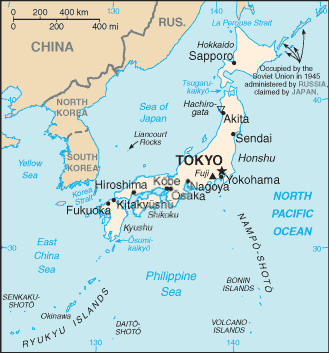
K Y O T O
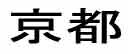
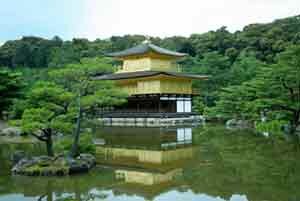
When you say the words "Japanese tourism" or "tour Japan," Kyoto is perhaps the first city to come to mind. Kyoto is the most popular destination for tourists in Japan. Kyoto is home to countless temples and shrines, including the Kinkakuji (Golden Pavillion), pictured below.
Kinkakuji is perhaps the most photographed landmark in all Japan. Kinkakuji is a Zen Buddhist temple. (Its formal name is Rokuonji.) Work was begun on the temple in 1397. Originally, the structure was to be a private residence for the shogun Ashikaga Yoshimitsu. It was converted into a Zen Buddhist temple when the shogun died in 1408.
Kyoto was Japan's capital from 794 until 1868. During these years, it was also the emperor's residence. The city's original name was Heian-kyo, or "Peaceful Capital." The city was built by Emperor Kammu, who patterned it after a Chinese city, Chang-an (modern-day Xian).
The city had a severe crime problem in the tenth century. It was also shaken by battles between rival groups of warrior-monks. Over the years, the city has been virtually destroyed by fire on several occasions. Kyoto was razed during the Onin War (1467-77). However, because of the city's cultural significance, it was spared Allied bombing during World War II.
Kyoto is part of the Kansai district, and many of its residents speak the unique Japanese dialect known as Kansai-ben.
More facts about Kyoto:
-
Today Kyoto is Japan's seventh largest city.
-
Kyoto hosts some 500 matsuri, or festivals, each year.
-
Prior to Kyoto, Japan's capital was Nara. Emperor Kanmu moved the capital from Nara because he was exasperated with struggles between rival factions of Buddhist monks.