Departments


International Law Moot Court
Original Japanese Source: Yomiuri Shimbun, 2002
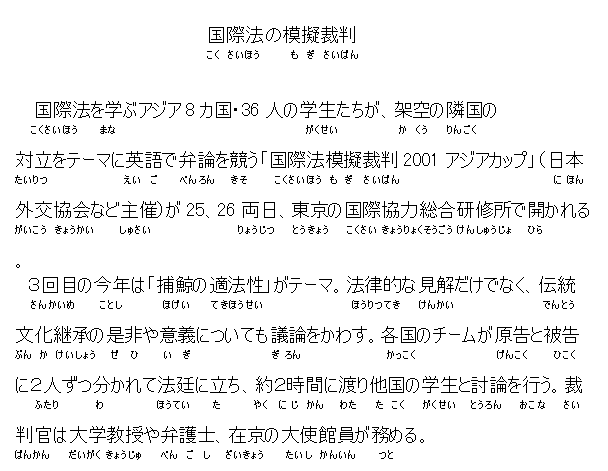
“A group of 36 International Law students from 8 countries will participate in an English-language debate competition, based on the premise of a disagreement with imaginary neighboring countries. The event, “The International Law Moot Court—2001 Asian Cup” will be sponsored by the Japan Diplomatic Association and other organizations. The event will be held on the 25th and the 26th, at the General Research Center for International Cooperation.
The theme of this year’s event, the third of it’s kind, will be “the legality of whaling”. The theme will be examined not only from a legal perspective, but also from the standpoint of the propriety and significance of the succession of traditional culture. Two members from each country’s team will assume the role of the role of plaintiff, and two will assume the role of defendant. They will then debate the students from the other countries’ teams for about two hours. The role of judge will be filled by university professors, attorneys, and the embassy personnel stationed in Tokyo."
Vocabulary Notes
国際法 "international law"
こくさいほう
架空の "imaginary; fictitious"
か くう
隣国 "neighboring country; adjacent nations"
りんごく
対立 "confrontation, conflict"
たいりつ
弁論 "debate; discussion"
べんろん
競う "to compete; to have a competition"
きそ
模擬裁判 "mock court; moot court"
も ぎ さいばん
外交協会 "diplomatic association"
がいこうきょうかい
国際協力 "international cooperation"
こくさいきょうりょく
捕鯨 "whale hunting; whaling"
ほ げい
適法性 "legality; legitimacy under the law"
てきほうせい
法律的な見解 "legal perspective"
ほう りつてきな けんかい
伝統文化 " traditional culture"
でん とうぶん か
継承 "succession; inheritance"
けいしょう
原告 "plaintiff"
げんこく
被告 "defendant"
ひこく
法廷 "court"
ほうてい
討論を行う "to debate; to have a debate"
とう ろを おこなう
是非 "propriety"; "right vs. wrong"
ぜひ
裁判官 "judge"
さいばんかん
弁護士 "lawyer; attorney"
べん ご し
Usage Notes
1.
Tooron o okonau討論を行うcan be expressed more simply as tooron suru 討論する.
会議で会社の方針を討論しました。
"We debated company policy in the meeting."
2.
You can use dake de naku だけでなく to say “not only..” :
日本語だけでなく、中国語も勉強しています。
“I study not only Japanese. but Chinese also.”