Google   Recent Updates: Kanji Lab / Everything Japanese Guide / Grammar Page
 
Web www.japanese123.com    Learn Intermediate Japanese Through the News!

Home

Departments

Basic Vocabulary

More Archives!

Grammar

Kanji

Proverbs

Word Focus

Business Japanese

Gift Shop
 

Feedback

The Everything Japanese Guide


Basics:


ONLINE GUIDE TO JAPANESE COMPOUND WORDS!

Japan City Guide

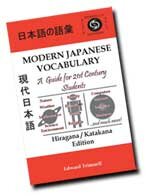
Modern Japanese Vocabulary:

A Guide for 21st Century Students

"File this little book under 'secret weapon'. It's really that good." --Amazon.com customer review




Video introduction to the book Falling in Love with Carp....


E d 's  J a p a n e s e  B l o g


Blog archives here...

May 12, 2008

NOT A DIFFICULT KANJI

This is the kanji with a negative attitude, as its meaning is “not, negation.” The kun reading of this character, na(i), is most often written in hiragana in contemporary Japanese texts. This is also true of its conjugated kun forms, like naku naru 無くなる (=get lost; go missing; to die). There are two on readings, MU and BU. These are located at the beginning of many compound words, and the high frequency of both readings makes the distinction between MU and BU mostly a memorization task:


MU-beginning words:

無色(むしょく)colorless

無口(むくち)taciturn

無休(むきゅう) no holidays; never close (said of a store or business

BU-beginning words:

無事(ぶじ)safe and sound

不気味(ぶきみ)eerie

無用心(ぶようじん)unsafe; lacking caution

Words that end with the kun reading:

A few words, like mottainai 勿体無い (=wasteful) end with the kun reading.

Words that end with the on reading:

Words that end with the on reading of are rare:

皆無(かいむ)nothing; nil

有無(うむ)existence; presence

虚無的(きょむてき)nihilistic


May 04, 2008

北半球

きたはんきゅう  

Northern Hemisphere

The excerpted article below discusses the phenomenon of winter. Included are the Japanese words for the Northern and Southern Hemispheres. 

冬は四季の一つで、一年中で最も寒い季節である。北半球では1月が一番寒さが厳しい。南半球は季節が逆になるので7月が冬となる。

日本の気象庁では一日の最低気温が0℃以下の日を冬日(ふゆび)、また、その日の最高気温が0℃未満の日を真冬日と呼んでいる。およそ四国九州以北では、このような日は一月を中心に十二月から三月にかけて生じるから、このあたりが冬の範囲にはいる。なお、南半球では6月・7月・8

Source: http://ja.wikipedia.org


真冬日        まふゆび  dead winter, the middle of winter

四季        しき      four seasons

一年中     いちねんじゅう   all year round

一番       いちばん  number one ; the most     

寒さが厳しい  さむさ が きびしい   the cold is severe

南半球  みなみ はんきゅう   Southern Hemisphere

逆になる       ぎゃく に なる  to be reversed; to be opposite

未満       みまん       under; less than

中心      ちゅうしん    the center

範囲      はんい       range; scope


April 26, 2008

"So many people in Russia studying Japanese" 

Russia and Japan haven’t always been on the friendliest of terms. Tension between the two countries began in the late nineteenth century, when both wanted to control Manchuria and Korea. Then there was the Russo-Japanese War of 1904-5, which the Japanese won. Since the end of WWII, Japan and Russia have had a dispute about the ownership of the South Kuril Islands. 

Nevertheless, this doesn’t seem to be hurting the popularity of Japanese language studies in Russia, as this article notes: 

[Japanese Prime Minister] Fukuda earlier visited a school in Moscow to watch a Japanese class being taught.  

After meeting with pupils from the lycee, he said: "I am very surprised that so many people in Russia are studying Japanese."  

There are currently 14 schools in Moscow teaching the language.  

"The Japanese government intends to continue efforts to popularize the national language and expand programs for Russian-Japanese exchanges," he said.  

Read the complete article here.


Tutorial: The Acquisition of Profits


利潤の獲得

rijun no kakutoku


Nihon no kigyoo wa tashu-tayoo na seihin no seisan o okonau koto ni yotte rijun o kakutoku shi, seichoo shimasu. 

日本の企業は多種多様な製品の生産を行うことによって利潤を獲得し、成長します。

"Japanese companies acquire profits and grow through the production of a wide variety of products."

Continue tutorial....


April 20, 2008

A Japanese-language article about campus life in the U.S. 

The university discussed here is the University of Cincinnati, which happens to be my alma mater: 


大学生らが銃の携帯を主張 キャンパスでの護身に必要と


米オハイオ州シンシナティ(CNN) 米国の大学キャンパスなどで銃乱射事件が続発している事態を受け、一部学生らの間で最近、自衛のために銃を携帯したいとの声が高まっている。


Read the complete article here


Key Vocabulary:


大学生ら (だいがくせいら) university students

銃の携帯 (じゅう の けいたい) carrying guns

主張する (しゅちょう する) to insist on

護身 (ごしん) self-defense

必要 (ひつよう) necessary

銃乱射事件 (じゅうらんしゃ じけん) random shooting incidents

続発する (ぞくはつ する) to occur one after another

自衛 (じえい) self-defense


April 14, 2008

Another good use for Japanese language skills…. 

Determining what flavor of potato chip you want at a Japanese food mart: 

Because he knew Katakana, the Japanese alphabet, Carmel Middle School eighth-grader Allan Schaefer was able to read the different flavors of potato chips at Sakura Mart in Indianapolis. He chose curry flavor over French salad. 

Schaefer was among a group of eighth-grade students in a Carmel Middle Japanese class who had a hands-on experience last week with the Japanese language and culture.  (continue...)


Teaching Japanese in Shelbyville, Indiana 

I don’t know if you have any interest in teaching Japanese to high school students. Here is a profile of Nihongo student who learned Japanese and did exactly that… 

In high school, Steve VonWerder wasn't voted "most likely to teach Japanese." 

"Most language teachers learn their language in high school," VonWerder said, "but I didn't study any foreign language in high school." 

In fact, the Shelbyville High School teacher didn't show any interest in learning a foreign language until he traveled to Japan as a missionary at age 24. 

"I wanted to teach English in a foreign country and do Christian work," VonWerder said. VonWerder learned Japanese in six months through immersion. For him, learning the language was a necessity, not a novelty. 

"I had to learn Japanese so I could buy my bananas," VonWerder said. "How could I pay my bills if I couldn't speak the language?" (continue reading…)


April 08, 2008

Is Japanese enrollment declining at this Maine college?  

For those of you who are interested in who is studying what language, this article may be interesting. The sample here is admittedly a small one (students at Bowdoin College, in Brunswick, Maine). But a sample is a sample. Now let’s dig in. 

The article states outright that Russian language enrollments are declining. This is an old story. Russian language studies enjoyed considerable prestige during the Cold War, and a big surge of popularity during the Gorbachev era. In 1990 many Americans believed that Russia was going to become the next economic superpower. We now know that history turned out differently. 

The article doesn’t exactly say that Japanese enrollments are declining, but that they are small to begin with. This doesn’t surprise me. Japanese is a difficult language, and it has none of the chic appeal associated with some European languages like Italian and French. Japanese is a language for dry, practical people who study business, accounting, and engineering. So what’s wrong with that? As the professor who is interviewed in the article reminds us, Japan is still the world’s second largest economy, China notwithstanding. 

My guess is that the Japanese language will never enjoy stratospheric levels of popularity in the U.S. There is too much competition from other languages these days (Spanish, Chinese, Arabic, etc.), and too many other countries occupy so much of the news. But Japanese remains an extremely useful language, and my guess is that it will remain so well into the foreseeable future.


April 06, 2008

Word of the day:

(ばい)

-times, fold


U.S. presidential hopeful Barack Obama is setting records on the fundraising front,  as this article notes:


選挙資金競争でもオバマ氏優勢、3月はクリントン氏の倍か 


米大統領選の民主党候補指名争いで首位を走るオバマ上院議員の選対本部は3日、今年3月の献金額は4千万ドル(約41億2千万)に達したとの暫定数字を発表した。献金者は44万2千人以上で、うち21万8千人以上が初の寄贈者としている。  

一方、ライバルのヒラリー・クリントン上院議員の陣営は、3月の選挙資金は約2千万ドルであることを明らかにした。

Read the complete article here..


Supplemental vocabulary: 

米大統領選 (べいだいとうりょうせん) U.S. presidential election

民主党候補指名争い(みんしゅとう こうほ しめい あらそい) fight for the nomination of the Democratic Party

首位を走る (しゅい を はしる) to take the lead

献金額 (こうけんがく)donation amount

暫定数字 (ざんてい すうじ)tentative number

貢献者 (こうけんしゃ) donor

寄贈者 (きぞうしゃ) contributor; donor

選挙 (せんきょ)election

競争 (きょうそう)competition


The many ways to say "to wear" in Japanese

I just couldn't resist that swipe at wearing neckties....


March 30, 2008

Word of the day

寸前

(すんぜん)

immediately before; right before


The headline  below contains some disturbing news. Apparently a large ice shelf at the South Pole is on the verge of collapse due to global warming.


南極の大規模棚氷、温暖化で崩壊寸前


Supplementary vocabulary: 

南極(なんきょく)South Pole

大規模 (だいきぼ)large scale

棚氷(たなごおり) ice shelf

温暖化 (おんだんか)(global) warming

崩壊 (ほうかい)collapse


March 25, 2008

Word of the Day

揺るぎない

(ゆるぎない)

firm, unshakable 


The following article describes U.S. Vice President Cheney’s trip to Israel. While in Israel, the VP affirms the U.S. commitment to U.S.-Israeli ties 

米副大統領がイスラエル訪問 「揺るぎない」関係維持を約束


Supplementary vocabulary

米副大統領 (べいふくだいとうりょう) U.S. Vice President

訪問 (ほうもん) visit

関係維持 (かんけい いじ) maintenance of relations

約束する (やくそく する) to promise


March 21, 2008

Word of the day

非難する

(ひなん する)

to criticize; to rebuke


The article hyperlinked below discusses U.S. House of Representatives Speaker Nancy Pelosi’s meeting with the Dalai Lama, and her rebuke of China. (Click here to read the complete article) 


ペロシ米下院議長がダライ・ラマと会談、中国を非難


Supplementary vocabulary: 

ペロシ米下院議長 (ペロシ べいかいんぎちょう)U.S. House of Representatives Speaker Nancy Pelosi

会談(かいだん)conversation; talk

中国 (ちゅうごく) China


March 19, 2008

Chinese or Japanese?

And here your host addresses that age-old question: should I study Japanese or Chinese?


March 16, 2008

Word of the day

偽札

(にせさつ)

counterfeit bill


In recent years, the U.S. government has been searching for ways to combat counterfeiters. The article hyperlinked here describes how the new 5-dollar bill is easy to distinguish from fakes..


新しい米5ドル札がお目見え、偽札と見分けやすく


March 13, 2008

More signs of the popularity of Japanese in Asia...

VietNamNet Bridge – Japanese language teaching programs will be extended to secondary schools in addition to universities and high schools, a Japanese official said.

At the opening ceremony of the Japan Foundation Centre for Cultural Exchange in Hanoi on March 10, Japan Foundation President Kazuo Ogoura said language teaching at the centre will be more diversified than before.  (continue reading...)


March 10, 2008

Word of the day

一人っ子

(ひとりっこ)

only child


The article below discusses China’s one-child-per-family policy, or 一人っ子政策(ひとりっこ せいさく)  

中国、一人っ子政策を「今後10年は維持」と 

北京(CNN) 10日付の中国英字紙チャイナ・デーリーは、人口抑制のための「一人っ子政策」を今後少なくとも10年は続けるとする張維慶・国歌人工計画出産委員会主任の発言を伝えた。 (continue reading…)


March 09, 2008

Foreign language vocabulary acquisition 

I generally keep the content at EdwardTrimnell.com distinct from the content here at Japanese123.com. On this site I write almost exclusively about Japan and the Japanese language, while EdwardTrimnell.com is a hodgepodge of politics, social commentary, book reviews, and personal bloggery. (I usually don’t editorialize too much here; but on EdwardTrimnell.com I feel free to burden the world with my personal opinions about every topic under the sun.) 

Today I am going to make an exception to the usual division between Japanese123.com content and EdwardTrimnell.com content. I made the following video to respond to a question sent by an EdwardTrimnell.com visitor: “How to you acquire a vocabulary in a foreign language?” I think that the video may be of interest to users of this site as well.


March 07, 2008

Ergo Proxy and Asian Languages 

An interesting take on the way Asian languages like Japanese and Chinese are blended with English on the Internet:

Engrish — a patois of Japanese and English, but also of English and other Asian languages — pervades YouTube commentaries and other free-for-all global forums: there they are, roman letters, usually all lowercase and often with irregular spacing between words, expressing clearly or seemingly non-Western ideas, sometimes much more decorously than my fellow Americans, sometimes far less.


Word of the day 

懸念

けねん

worry; concern


As the Nikkei reports, concerns about the U.S. economy have increased the value of the yen against the dollar:


円、一時8年ぶり101円台半ば・米景気後退懸念根強く


Continue reading here….


March 04, 2008

An interesting combination of gairaigo and pure Japanese: 

Observe how the Japanese translate “insider trading”: 

政府は4日の閣議で、インサイダー取引への課徴金の引き上げや市場参加者を機関投資家に限定した「プロ向け市場」の創設などを盛り込んだ金融商品取引法改正案を決定した。

 Source: Nikkei.co.jp


March 03, 2008

A memorable short story set in Japan 

If you haven’t yet read Tom Doyle’s short story, “The Floating Otherworld,” then take twenty minutes and do so now.  

This is a macabre story, but it doesn’t really cross the line into outright horror. The story is set in Japan during the O-Bon holiday. The main character is a thirtysomething expatriate professional who has an office job in Tokyo. Many of you should be able to relate. This is not the sort of thing I usually feature on this site, but I think you’ll like it.


Robots and Shinto 

I have to admit that I am a bit fascinated by the whole robot thing, and robots are really taking off in Japan, as this article suggests. Apparently the idea of a robot is more palatable to the Japanese mindset, largely because of the country’s animist religion, Shinto: 

Japanese are also more accepting of robots because the native Shinto religion often blurs boundaries between the animate and inanimate, experts say. To the Japanese psyche, the idea of a humanoid robot with feelings doesn't feel as creepy _ or as threatening _ as it might do in other cultures.


February 28, 2008

Is Chinese easier than Japanese?


University of Auckland Chinese professor Paul Clark writes

Young (and not-so-young) New Zealanders are taking to the study of Chinese language with growing enthusiasm. They are discovering that the language is not difficult to learn and that it opens up a whole new world of knowledge and insight. 

Schools in Auckland, Hamilton, Rotorua, Wellington, Christchurch, and throughout the country are offering Chinese language instruction. Primary school children in Kristin School in Auckland begin their study of Chinese at about the same time as their formal English lessons start. 

We do have a precedent for this interest in Chinese. In the late 1960s, in what we could call the first flurry of interest in our Near North, first Indonesian and then Japanese took off in New Zealand high schools.  

New Zealanders who have been exposed to Japanese language at high school may be surprised to discover that Chinese is an easier language for English speakers to learn.

I’m not sure I can agree with that last line. Chinese does have easier grammar than Japanese. But Chinese pronunciation and aural comprehension skills take a lot of work.  

By the way, I think that both languages are worth learning. (I still plan to start a Mandarin tutorials section on this site.) However, students who switch from Japanese to Mandarin with the expectation that “Chinese is an easier language” are sure to be disappointed.


February 26, 2008

Tips for Learning Kanji

And here your faithful host addresses the age-old question: how to I learn kanji?


February 24, 2008 


Word of the Day 


肥満(ひまん) =  fat; obesity


The headline below indicates that middle-aged women in the U.S. are suffering more strokes, perhaps as a result of increased bodyweight.  


米女性の脳卒中、30‐50代で急増 肥満の影響か 

Notes:


脳卒中 (のう そっちゅう) stroke

急増 (きゅうぞう) sharp increase

米女性 (べい じょせい) American women

影響 (えいきょう) influence


February 23, 2008


Word of the day 

強風(きょうふう)

"strong wind"


Usage Example:


It seems that the weather in Japan got a little out of hand recently:


強風で大荒れ天気、JRや地下鉄が各地でストップ


日本海の低気圧が急速に発達しながら東に進んだ影響で…(continue reading here)


Supplementary Vocabulary:


大荒れ天気 (おおあれ てんき)stormy weather

地下鉄 (ちかてつ) subway

各地で (かくち で) all over, in every place

日本海 (にほんかい) Sea of Japan

低気圧 (ていきあつ) low air pressure

急速に (きゅうそく に) rapidly

発達する (はったつ する) to develop

東 (ひがし) east

進む(すすむ) to advance

影響(えいきょう) influence, impact


February 21, 2008 

Need inspiration? 

South African writer Rika Susan offers it in this piece entitled: 

“5 Money And Lifestyle Reasons To Learn Japanese Alphabets And Kanji Symbols” 

(I of course know that most of you don’t need encouragement; and not everyone learns Japanese for money. Consider this one to file away for the days when you do lack motivation.)


Word of the Day


衛星(えいせい) satellite


Usage Example (a headline from CNN.co.jp):


スパイ衛星をミサイルで撃墜、有毒燃料タンクを破壊か


Vocabulary: 

スパイ衛星 (スパイ えいせい) spy satellite

撃墜する (げきつい する) to shoot down

有毒燃料 (ゆうどく ねんりょう) poisonous fuel

破壊する (はかい する) to destroy 

Continue reading here.....


February 20, 2008 

Obama-mania and Japan 

Japanese123.com is generally a politics-free zone; but this article about the Japanese version of Obama-mania will be of interest to language students:
 

OBAMA, Japan — Just before the results of the big Feb. 5 round of primaries and caucuses reached this snow-covered fishing town hard by the Sea of Japan, a few of its most enterprising residents realized that a man who shared their town’s name could be America’s next president. (continue reading here…)


I think its safe to say that if the whole presidency thing doesn’t work out for Barack Obama, he will be more than welcome as a commercial spokesperson in Japan. 


Word of the Day


図星を指す(ずぼし を さす= to hit the bulls-eye; to hit the nail on the head 


Usage examples: 

あなたはアメリカ人ですか。図星でしょう。 


自分の心に突き刺さるということは、それが図星を指しているから。

Source: namonakihana.blog62.fc2.com/blog-date-200605.html


February 19, 2008

Origami planes in space? 

Well, it sounds a bit odd to me, but… 

In a bold bid to take the traditional art of origami beyond the Final Frontier, Japan is planning to release a huge squadron of paper aeroplanes in outer space.  

Don’t miss this one. Continue reading here


Word of the day 

へそまがり =  one who contradicts others just to be contradictory 

This word can also be used as an adjective, as in: 

へそまがりな天候が続きますね

Cat Language

Have you read "Cat Language" yet? This one gets a lot of internet links...


February 17, 2008

Instructor wows Tampa-area teens with Japanese grammar 

Here is an article from a Florida news site that covers a presentation about the intricacies of the Japanese language. The audience consisted of teenagers from the Tampa, Florida area 

You can the see University of South Florida instructor Ted Ohtani’s slide in the online photo. The slide introduces the multiple levels of politeness that are possible in even a very simple utterance in Japanese.  

I wonder if this inspired the kids to learn Japanese, or made them swear to avoid Japanese language classes at all costs? I’m going to be an optimist and bet on the former.


February 16, 2008

More Japanese by Example video....


February 14, 2008

For Valentines Day.....

A brief video from my YouTube collection: A few Japanese proverbs....


February 12, 2008

山陽新幹線博多開業30周年 新幹線の歴史

The History of San'yo Shinkansen

Here is a video that should be reasonable accessible for those of you have intermediate-advanced listening skills. Listen for the phrase:

大きな影響を与えました(おおきな えいきょう を あたえました)= it exerted a big influence


February 10, 2008

Studying Japanese in junior high...

Anime never really floated my boat, but a lot of young people around the world are really into it these days. Many of them are content to consume anime in translation; but others have been inspired to learn Japanese.

Inconsequential interests and events often prompt people to jump into foreign language study. In my book Why You Need a Foreign Language & How to Learn One, I describe my own journey towards Japanese studies about 20 years ago. My reasons for learning Japanese at the time were somewhat frivolous in retrospect. But Japanese turned out to be a great resume builder and career tool.

So, my feeling is: whatever motivates young people to study foreign languages, I'm for it. Here is an article about two Missouri teens whose love of anime led to an interest in Nihongo....

Students' trip offers chance to study Japanese language and culture

February 10, 2008 | 4:58 p.m. CST

Before they began taking Japanese in school, Brent Head and Jacob Abbott tried to write the language themselves. Fans of anime, a type of Japanese cartoon, the boys copied the hiragana characters as best they could — not knowing what they meant but utterly captivated by their mystery. (continue reading...)


February 09, 2008


Japanologist Donald Keene 

You may have read some of my earlier postings about the books of Jack Seward (Japanese in Action, etc.). Seward, you may recall, originally learned Japanese for military purposes during World War II, 

Donald Keene is another Japan specialist from the WWII generation. He has written about thirty books, including a book about Shinto that served as the English-language standard on the topic for many years. 

His next book Chronicles of My Life: An American in the Heart of Japan will be available in stores soon. 

Here is a recent article about Keene in Time, as well as his Wikipedia entry


Word of the Day

大袈裟

(おおげさ)

exaggeration


物事をおおげさに言う  to exaggerate things (in speech)


More about Japanese corporations


Here is an example that I culled out of a business textbook, for those of you who are interested in Japanese corporate life.  

The excerpt describes the successes that the Japanese economy experienced in the postwar era, including the successful weathering of two oil shocks: 

第二次大戦後、日本は奇跡的ともいえる高度成長を遂げ、経済大国と呼ばれるまでになったが、その成長を支えた主役は企業であった。その後、日本は二度のオイル・ショックも見事に乗り切り、その強さがあらためて認識された。 (continue...)


Word Focus:

失敗 

Sometimes you fail, and that is exactly what the word失敗(しっぱい), or “failure” is all about. The following excerpt discusses the failure of a civilian rocket that was launched (and subsequently crashed) in New Mexico: (continue...)

表面化する

The word  表面 = surface. And the suffix conveys the idea of becoming something. When you add 表面 and and then make this combination a Sino-Japanese verb with the addition of する, the result is 表面化する, which means to come to the surface.   (continue...)

Having a High Head:


頭が高い

zu ga takai


There are times when you are better off to quit when you're ahead, because a situation or a person is very difficult to handle. Seki no yama 関の山 describes a situation in which even the best effort will result in either a maintenance of the status quo, or possibly a deterioration in conditions: (continue...)



Japanese Compound Words

Japanese Business Vocabulary On CD-R

Why You Need a Foreign Language and How to Learn One

Modern Japanese Vocabulary: A Guide for 21st Century Students

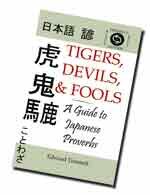
Tigers, Devils, and Fools: A Guide to Japanese Proverbs


We hope that this site is helping you learn Japanese! If you can spare a $1 to help cover expenses, we say Doomo Arigatoo!

(View the Doomo Arigatoo List of site sponsors.)
 

Copyright 2005 Beechmont Crest Publishing , All Rights Reserved